• Skip to primary navigation
  • Skip to main content
Brewers 1982

Brewers 1982

Covering the Milwaukee Brewers throughout the 1982 season, in real-time, as it would have happpened.

  • START HERE
    • About Us
    • Contact Us
  • Schedule
  • Roster
  • Cards
    • Topps
    • Donruss
    • Fleer
    • Stickers
    • Kellogg’s
  • BrewBot

Commentary

Filling Holes for 1983

November 30

When you go to the World Series, you wouldn’t expect much to change. But when you fall one win shy of taking the title, you need to examine every aspect of the club.

Well, except shortstop. The Crew is set there. And first base. The Brewers are set there as well. And third. Second, too. Also catcher.

As you can see from our grades (hitters | pitchers) it was a very good year.

OK, OK, so the Brewers have few if any holes in a lineup that led the majors in homers (216), RBI (843) and runs (891) and nearly every other offensive category. When your No. 9 hitter bats .295, things are good.

As for the pitching, the offense covered a lot of the deficiencies on the mound, especially the thin pen and Rollie Fingers’ injury. Throughout the season, the defense was adequate. There are no defensive wizards like St. Louis’ Ozzie Smith, but no complete hackery in the field either. They could use more speed in the outfield, but they cover the angles well enough.

Yet, the Crew can’t expect everything to go as well as it did in 1982. It was historic in nearly every manner possible which is why the Brewers need to look at what they have and see how they can improve in 1983.

Paul Molitor
Molly has the hot corner nailed down.

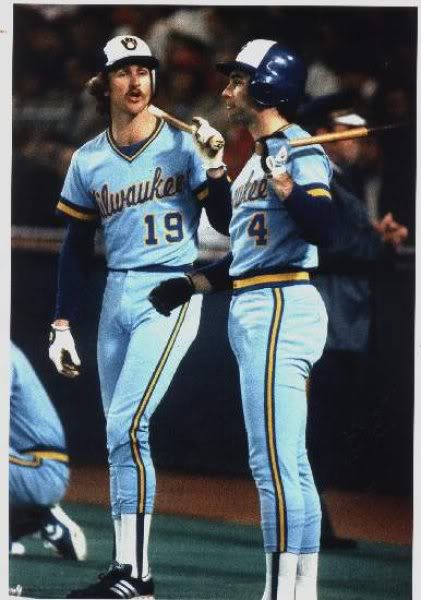
As for the infield, there is little room for improvement. We noted earlier that Jim Gantner hit .295 and he was the weak link at the plate for that group. With Paul Molitor at third, Robin Yount at short, Gantner at second and Cecil Cooper at first, the Brewers have the best infield in the majors. They could be together for another five years.

The Brewers do need to shore up their bench. Don Money had a great season (.284), but he’s 35 years old. Roy Howell didn’t provide much pop off the bench. The Crew needs to find a regular DH instead of platooning Money and Howell. They also need to find one decent backup infielder. Ed Romero is fine for spot duty, but you don’t want him playing long stretches if, god forbid, one of the regulars goes down.

At catcher, Ted Simmons is only 32, but he has a lot of miles on him. The Crew is set for another three or four years here, but need to develop a backstop for the future. Ned Yost isn’t it.

The outfield is also pretty much set with Ben Oglivie in left, Gorman Thomas in center and Charlie Moore in right. Benji is 33 and, although he hit 34 taters, his bat looks slow as he hit .244. Gorman played hurt for the last part of the season. While Moore may have Roberto Clemente’s arm, he has Roberta Flack’s bat. Mark Brouhard is the heir apparent in right, but his bat has to wake up. The Crew could use another solid left-handed bat in the outfield as well as Marshall Edwards is 29 and slight at the plate.

Mark Brouhard does not represent a long-term solution in the outfield.

Pitching is where the biggest improvement needs to be made. As Loomer noted in his pitching grades, the rotation hadn’t solidified until Don Sutton arrived. Now, they have Sutton, an innings-eater in Mike Caldwell and Cy Young winner Pete Vuckovich. The Crew rotated through Jim Slaton, Moose Haas and Bob McClure at the bottom of the rotation, but they could use another solid lefty at No. 4 and let Haas anchor the bottom of the rotation. Doc Medich has retired.

If the Brewers are able to re-sign the free agent McClure, a former starter, he could work as a long reliever, as could Slaton. It would also be nice to see a fireballer in short relief. If Rollie Fingers can return to full health, the Brewers don’t need a closer. If not, they need to look at getting some help. Ladd performed well in the ALCS, but blew up in Game 2 of the World Series. He did strike out 12 in 16 innings.

But that’s about it. The great thing about this team is it’s built to win for another two to three seasons. A couple tweaks here and there, and next year at this time, we could be talking about the Crew’s first World Series championship.

Filed Under: Commentary

Grading the Brewers: Hitters

November 28

Paul Molitor and Robin Yount
Robin Yount and Paul Molitor led a potent Brewers offense in 1982

It would be easy to give every Brewer a grade of A for the 1982 season because they came within one win of a World Series title. But while the team will receive an A (whoops, did I ruin the surprise?), like the Brewers season, nothing is easy, not even grading this team.

[View the Pitching Grades]

It will come as no surprise that Robin Yount received the highest grade while others such as the injured Larry Hisle bottomed out.

INFIELDERS

Cecil Cooper, 1B
Is there a better first baseman in the American League? Nope. He’s a legit Triple Crown threat each season. For the third consecutive full season, Coop hit at least .300 (.313), he slammed 32 homers and was second in the AL with 121 RBI. He added 38 doubles as a part of his 205 hits and scored a career-high 104 runs. He committed only five errors.
Grade: A

Jim Gantner, 2B
Played in 132 games, the fewest of all the regular Brewers infielders, which isn’t surprising, considering his hard-charging style and his ability to hang in when runners are bearing down on him. For a guy who hit from the nine-hole, a .295 average wasn’t too shabby. He’s not a masher (four homers), but a good bottom of the order guy.
Grade: B

Paul Molitor, 3B
The Ignitor lived up to his name as he provided the spark for the American League’s most potent offense. Led the league in AB (666), plate appearances (751) and runs scored. Hit .302 and had career highs in homers (19), RBI (71) and stolen bases (41). One of the best baserunners you’ll ever see. Adequate in the field.
Grade: A

Robin Yount, SS
Simply one of the finest seasons ever by a shortstop. His 129 runs, most ever by a shortstop. His 114 RBI, third all-time. Add to that a .331 batting average with 29 taters, 46 doubles, 12 triples and you get a .578 slugging percentage, which was .001 behind Ernie Banks for best ever. But Banks hit .285. Yount hit for power and average. Would have won the AL batting title if Willie Wilson had been man enough to play the last day of the season. He led the league in hits (210), doubles, slugging percentage and total bases with 367. And to think, he’s only 26. He was the clear MVP.
Grade: A+

Don Money, DH, INF
A damn good season for the 35-year-old Money, who platooned with Roy Howell at DH. In 275 ABs, Money slugged .891 as 33 of his 78 hits went for extra bases, including 16 home runs, the third highest total of his career.
Grade: B+

Roy Howell, DH INF
The Brewers had plenty of power, but only four taters? That’s Gantner territory (no offense, Gumby). Howell hit .260 and managed to drive in 38 runs. Other than that, the Crew may need to find another left-handed bat at DH.
Grade: C

Ed Romero, 2B
Backed up Gantner at second and played in 52 games and hit .250. He didn’t walk much, didn’t steal a base and hit one homer. He’s a typical light-hitting middle infielder.
Grade: C-

Rob Piccolo, INF
Came over from Oakland in a midseason deal, hit .286 in 21 ABs in 22 games.
Grade: Inc.

CATCHERS

Ted Simmons, C
Simba’s slower than the orbit of Pluto, but few backstops call a better game. He also’s a switch hitter and the Crew doesn’t need to sit him depending on who is pitching. His 97 RBI were the most since he drove in 100 with the Cardinals in 1975 and his 23 homers were the most since he hit 26 in 1979. His 29 doubles were fourth on the team. At 32, Simmons is what he is.
Grade: B

Ned Yost, C
His homer in Boston proved to be one of the biggest hits of the season, as it helped the Crew get a four-game lead with five to play. Other than that, he played in 40 games, hit. 276 and was OK as Simmons’ backup. He’s 27, but he’s not starter material.
Grade: C+

OUTFIELDERS

Ben Oglivie, LF
Benji, with Coop, provided the left-handed pop in the lineup smashing 34 homers and driving in 102 runs. He won’t hit for average, but his .244 followed the 1981 season where he hit .243. This from a guy who hit .282 or better in his first three seasons with the Crew.
Grade: B

Gorman Thomas, CF
Stormin’s 39 homers and 112 RBI were beautiful. His .245 average and 143 strikeouts were not. Gorman’s not gonna hit for average, ever, but his 29 doubles were third on the team, even ahead of Molly, who had 26 doubles. With Gorman, what you see is what you get: a gritty dude who’ll swing for the fences.
Grade: B

Charlie Moore, RF
A converted catcher, Moore’s hose accounted for 23 outfield assists. And who can forget the throw that nailed Reggie Jackson in Game 5 of the ALCS? Like the rest of the Crew outfield, Moore didn’t hit for average (.254), but he had 22 doubles. Other than that, he hit like a catcher.
Grade: B-

Mark Brouhard, RF
Brouhard saved the Crew’s bacon in Game 4 of the ALCS, his finest moment of the season. His worst moment, losing the job in right field to Moore after being injured. Brouhard played in 40 games and had four homers and 10 RBI.
Grade: C

Marshall Edwards, OF
The only outfielder on the Brewers with any speed, but he suffered from the same affliction of the other Crew outfielders: low batting average. Edwards hit .247 and worse yet, walked only four times. For a team that drove in runs by the bunches, Edwards didn’t distinguish himself in any fashion.
Grade: C-

Larry Hisle, OF-DH
It was sad to see the man who helped the Crew’s renaissance in ’78 succumb to injury. He hit .129 in what will likely be his last season.
Grade: D

Bob Skube, OF, UTL
Never saw enough time to make an impact, compiling 12 ABs between them.
Grade: Inc.

OVERALL

Stats don’t lie: They hit a major-league leading 216 home runs, drove in an MLB-high 843 RBI, led the majors in total bases (2606), runs (891), slugging percentage (.455) and at bats (5733). Wait, we’re not done yet. The Crew was second in hits (1599, four behind the Royals), doubles (277, also behind the Royals), batting average (.279, six points behind the Royals) and second-last in strikeouts (714). They didn’t walk much (484, 14th in the majors) and they don’t steal bases (84), but when you pound the ball like the Crew did this season, you don’t need to go station-to-station.

There is no other grade for this team. It was second to none at the plate.

GRADE: A
Filed Under: Commentary Tagged With: Ben Oglivie, Bob Skube, Cecil Cooper, Charlie Moore, Don Money, Ed Romero, Gorman Thomas, Jim Gantner, Larry Hisle, Mark Brouhard, Marshall Edwards, Ned Yost, Paul Molitor, Rob Picciolo, Robin Yount, Roy Howell, Ted Simmons

Grading the Brewers: Pitchers

November 26

Don Sutton
Don Sutton gets the only straight A among Brewers pitchers.

Now that we’ve had a month to absorb the finality of the 1982 season and dust off the painful ending, it’s time to take a balanced look at what went right and what went wrong. We’ve gotten our pencils out and are going to grade three main categories: Offense, Starting Pitching and Relief Pitching. Under each section, we will grade players individually. Today we’ll start with pitchers. An average result will be a C, so such a grade should be the typical expectation. We will not grade more loosely or harshly based on expectations.

Additionally, note that we will not grade players who are no longer with the team (like Randy Lerch). Minimal number of plate appearances to receive a grade is 100 and pitchers must log at least 25 innings pitched. Anyone else will be given an Incomplete grade.

Starting Pitching
Despite the big names of Pete Vuckovich, Don Sutton and Mike Caldwell, the Milwaukee Brewers starting rotation was very average until Don Sutton arrived. In fact, one could argue that the Brewers were not a playoff caliber team without Don Sutton on it. The Brewers’ starting pitchers were at or a bit above the league average in several key categories: complete games (fifth with 34), shutouts (seventh with six) and quality starts (fourth with 84). They also led the American League in wins (76) and innings pitched per games started (6.7). While the Brewers had difficulty finding consistency at the back end of the rotation, the Sutton-Vuckovich-Caldwell trio was one of the best in the game, and the starting five finished as one of the better groups in the AL.
Overall Grade: B

Relief Pitching
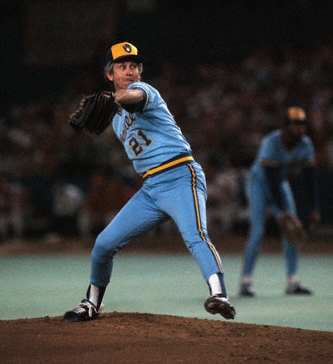
While the starting rotation got a boost near the end of the regular season, the bullpen took a major hit when Rollie Fingers went down. The Brewers could not replace the 1981 AL Cy Young and MVP winner. In fact, not close to adequately, as the bullpen threw several key games down the stretch to make the regular season conclusion much more interesting than it should have been. While the relievers were a surprising bright spot in th ALCS, it’s quite possible the Brewers are World Champs with a healthy Rollie Fingers in the World Series. Jim Slaton was a rock in the bullpen, but otherwise a Fingers-less relief corps was far below average. And while Fingers would make this group a B- by himself, it’s all about how the team finished.
Overall Grade: D+

Don Sutton, SP
Sutton was everything Harry Dalton could have asked for when he pulled the trigger on a late season trade with the Astros. In seven regular season starts with the Brewers, Stutton went at least seven innings in all but one, when he went 6 2/3. The Brewers won five of his seven starts, including all of his final four. It was Sutton who stopped the bleeding in Baltimore on the final day of the season, where Vuckovich and Caldwell could not. Sutton’s regular season ERA was a shiny 3.29. If that trade was not made, the Brewers would not have made it to the postseason.
Grade: A

Pete Vuckovich, SP
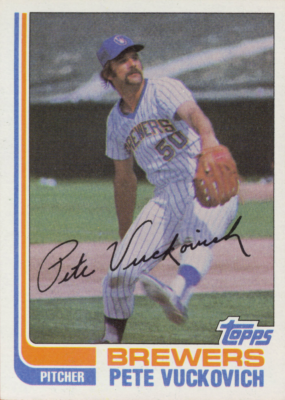
Vuke just wins games. In 30 starts, he won 18 and lost only six. His 3.34 ERA was lowest of any regular starter on the team, he led the Brewers with 105 strikeouts and was second in complete games (9) and innings pitched (223 2/3). While he never made it easy on himself by walking an excessive number of batters, Vuke will also be remembered for his big 11-inning complete game win over the Red Sox in a crucial game in the final month in Boston. Then again, he’ll also be remembered for not winning another game from that point forward through the end of the postseason.
Grade: A-

Rollie Fingers, RP
This evaluation is nearly incomplete since Fingers missed the final month and change due to an injured forearm. It’s difficult imagining what the Brewers could have done with a healthy Rollie Fingers. Rollie was on his way to another fantastic season, posting a 2.60 ERA and 29 saves before being lost for the season. Fingers was leading the league in saves at the time of his initial injury, and is still the premier closer in the game when healthy. Fingers only gets a minus here because of factors outside of his control, as we wonder what could have been.
Grade: A-

Mike Caldwell, SP
The unsung hero on this staff. Pete Vuckovich gets the attention as the Cy Young winner and Don Sutton as the savior, but Mike Caldwell was the team’s iron man. He led the Brewers in starts (34), complete games (12), shutouts (3) and innings pitched (258), and was second with 17 wins.
Grade: B+

Jim Slaton, SP/RP
Slaton was used as an all-purpose pitcher for the Brewers in 1982, used in high leverage situations out of the bullpen as well as an occasional spot start. His 3.29 ERA was the best of any reliever not named Fingers, and other than a blip in his final regular season appearance in Boston, Slaton was solid from August on while his bullpen-mates were coughing up games regularly.
Grade: B

Moose Haas, SP/RP
Haas was solid overall, but imploded in June (6.96 ERA) and August (5.49 ERA). Still, Moose finished strong with a 2.22 ERA in September and October, and was also solid in the postseason. Haas was third on the team in innings pitched (193 1/3) and second in strikeouts (104). Yet, his lack of consistency kept him from being a dependable pitcher for the Brewers.
Grade: C+

Dwight Bernard, RP
Bernard’s final 3.76 ERA isn’t bad, but he was worst when the Brewers needed him most. He actually had an ERA of 2.92 on September 2, but then fell apart. Bernard allowed 10 earned runs in his final eight regular season appearances, which covered most of the final month. Harvey lost confidence in Bernard and used him sparingly from that point forward.
Grade: C

Doc Medich, SP
A late season addition for the Brewers from Texas, Medich was not what the doctor ordered. Hoping he’d be a stabilizing force as a veteran starter in the rotation, the Brewers signed Medich and let go of Randy Lerch. Medich (5.00 ERA in 10 starts) wasn’t any better than Lerch (4.97 ERA).
Grade: D+

Jerry Augustine, SP/RP
He’s been a Brewer since 1975, but Jerry Augustine was not a fan favorite in 1982. While injuries may have contributed to and shortened his season, Augustine was ineffective and did not play a major role on this staff. A May 11 start against the Royals resulted in 12 earned runs on 15 hits in five innings, and was used primarily out of the bullpen from then on. Augustine was a non-factor after the All-Star break, partly due to injuries and partly due to ineffectiveness. In his final 12 innings pitched, Augie allowed 14 earned runs.
Grade: D

Jamie Easterly, RP
Like Augustine, injuries and ineffectiveness limited Easterly’s role on the Brewers in 1982. He started well, posting a 3.27 ERA through June. But as seems to be the case with many of the Brewers’ relievers, Easterly fell apart when the injury to Fingers required production. Easterly allowed six earned runs in two appearances against the Yankees in September and his ERA ballooned to 5.27. He was a mop-up man from then on.
Grade: D

Pete Ladd, RP
While Ladd wasn’t spectacular in his 16 regular season appearances (4.00 ERA) in 1982, he did show glimpses of what may be to come, particularly in the ALCS when he retired 10 batters in a row.
Grade: Inc.

Chuck Porter, RP
Porter spent most of his 1982 season in Vancouver, but is expected to have a much larger role on the Brewers in 1983.
Grade: Inc.

Doug Jones, RP
The 25-year-old rookie allowed five hits and three runs in his only 2 2/3 innings pitched with the Brewers this season. It’s unlikely that he has a long term future with the club.
Grade: Inc.

Filed Under: Commentary Tagged With: Chuck Porter, Doc Medich, Don Sutton, Doug Jones, Dwight Bernard, Jamie Easerly, Jerry Augustine, Jim Slaton, Mike Caldwell, Moose Haas, Pete Ladd, Pete Vuckovich, Rollie Fingers

Almost There…

October 18

MILWAUKEE — One win away. Just one more win until baseball immortality. Just one more win until the Brewers deliver the city’s first World Series title since 1957.

Yount was every bit his MVP self in Games 4 and 5 in Milwaukee.

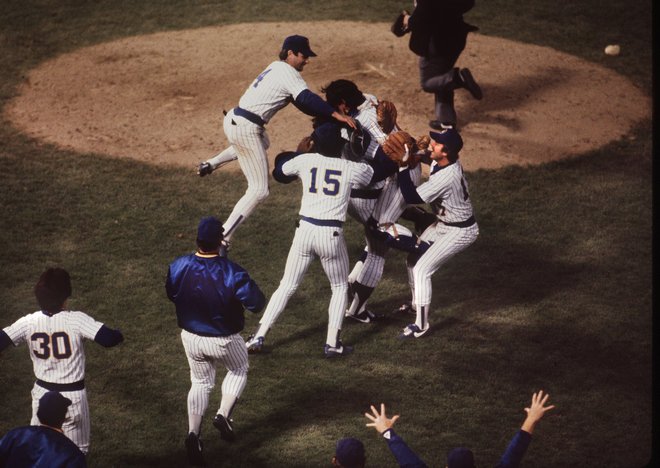
Still, Brewers fans stormed the field after Game 5 as if the Crew had won the Series. (And if they had not gagged in Game 2, this series would be over.) There’s a saying about acting as if you’ve been there before, but to be frank, the Crew hasn’t been there before. No one in my generation has been there before. It may be the last time until a victory parade that the Brewers fans would be able to get up close and personal.

Here’s hoping some of them didn’t storm the field thinking the Series was five games and that it was over. It was almost as if the parade plans have been made.

As much as i’d like to imagine the parade, the celebration and the ability to bribe my mom into staying up past my bedtime to watch Game 6 and Game 7, if necessary, will have to wait.

No, the Brewers need to get this over with in Game 6 with Don Sutton on the mound. Giving the Cards another shot in Game 7 could prove disastrous. Now is the time. It would be the smart and judicious thing to do.

The Brewers haven’t proven to be that this season, waiting ’til the last second to pull another rabbit out of their ball-and-glove caps, thrilling and frightening us every step of the way. But it’s time to get off the roller coaster ride. Game 4 was another example. With a comfortable 6-2 lead, the Crew surrendered two in the ninth and the Cards had two on with the winning runs at the plate for two outs.

It’s time to get off the roller coaster and earn a leisurely ride down Wisconsin Avenue with a World Series trophy in their hands. There’s no better time than now.

Filed Under: Commentary

Missing Fingers

October 14

ST. LOUIS — It’s as painful as the headline sounds, Brewers fans. For the first time this postseason, Rollie Fingers’ absence hurt the Brewers.

Rollie FIngers
Harvey said he could pitch. Rollie said he couldn't. Where does the True Blue Brew Truth lie?

Fingers, who has been out since Sept. 3 with a strained right forearm, was sorely missed as the bullpen collapsed late in Game 2. The Crew could have used their ace closer as Bob McClure and phenom Pete Ladd couldn’t keep the Cardinals off the board in a disastrous eighth inning.

Instead of flailing at Fingers’ forkball, the Cards waited patiently as McClure and Ladd gagged on the mound. McClure could only retire one of the three batters he faced that inning, while Ladd, who was lights out in the ALCS against the Angels, walked the first man he faced and then the next, which brought home George Hendrick with the eventual winning run.

Three walks and a single, and two of the walks were complete free passes with not one strike thrown. The most galling may have been Ladd’s four-pitch walk of Steve Braun.

Steve Braun? Who the f#ck is this guy?

This guy is a 34-year-old utility stiff who hit .274 in 62 at bats this season. Granted, he also walked 11 times to bring his OBP to .384, but make the guy put the ball in play. He hadn’t faced live pitching since Game 2 of the NLCS and he grounded out to Phil Niekro in his only postseason at bat.

But you also know what he is? A voyeur. The man makes his bones by watching. And he’s proud of it.

“I’m a hitter,” Braun told The New York Times. “I’m a professional hitter. You always want to swing the bat if you get the opportunity. [But] If I swung at pitches like he threw, I’d have been out of the big leagues years ago.”

Instead, he got a cheap RBI. It’s imperative Ladd makes Braun put it in play. Ladd has an exceptional fastball and the guy has never seen the rookie before. Braun hadn’t played in a week. Ladd has to make him do something with it other than watch it go high and wide for four straight pitches, damn it!

Apologies for the rage, but it was frustrating to watch the Crew let slip an opportunity to put the Cards in a two-game hole with the next three games at County Stadium. But a tip of the cap to Cards manager Whitey Herzog for recognizing the situation and putting a professional hitter such as Braun in the game in that situation. Then again, if the Brewers have Fingers, they’re probably not in that situation.

Porter’s two-out, two-run double in the sixth was a crushing blow.

Crew skipper Harvey Kuenn said Fingers could have pitched, but not in that situation.

“Yes, Rollie was well enough to pitch,” Kuenn said. “And no, I didn’t consider using him. I’ve used Rollie Fingers when we’re ahead, not in tie situations.”

While it’s admirable to save Fingers to lock down a W, the ace said he probably couldn’t have gone even if Kuenn had called on him.

“I couldn’t have pitched,” Fingers told The New York Times. “I’m a little stiff from not pitching for a month, not the injury. It’s like the fifth or sixth day of spring training.”

Only it’s not. It’s baseball’s biggest stage and the Brewers fell off of it in Game 2. Don Sutton doesn’t escape retribution either. Twice the offense gave him leads (3-0 and 4-2) and twice he gave up two runs with two outs. You would expect that from a rookie pitcher, not a vet of Sutton’s stature.

Then there was the botched hit-and-run in the ninth where Robin Yount, in one of the only times this season he hasn’t come through, swung through a Bruce Sutter pitch and former Brewer Darrell Porter, who killed the Crew with a two-out double in the third, gunned down Paul Molitor, snuffing any Brewers hopes.

Game 3 is tomorrow at County Stadium. Let’s hope the Crew, who has responded well to adversity all season, responds positively once again.

How disappointed are you in the Crew’s Game 2 flop? Let us know. You can also follow our tweets at @tweetsfrom1982

Filed Under: Commentary Tagged With: Bob McClure, Bruce Sutter, Cardinals, Darrell Porter, Don Sutton, George Hendrick, Harvey Kuenn, Paul Molitor, Pete Ladd, Phil Niekro, Robin Yount, Rolling Fingers, Steve Braun, Whitey Herzog

Brew-phoria!

October 11

MILWAUKEE — Cecil Cooper must have been floating on air. I was too, though, my feeling of weightlessness was aided by a Serta Sleeper mattress.

As soon as Robin Yount‘s throw landed in the webbing of Coop’s glove, I jumped off the bed in my parents’ room and landed in my dad’s arms, yelling and celebrating the Crew’s first trip to the Fall Classic and the first Milwaukee team to play in the World Series since my dad was a 10-year-old in 1958. Never have I been so happy to see a routine 6-3 putout in all my life.

There were so many great moments (which far outweighed the lousy ones — four errors?) in Game 5, but I’ll have no problem remembering them.

Molly’s baserunning. Moore’s hose of Reggie Jackson at third base. Benji’s tater. Moore’s infield bloop. Coop signaling for the ball to drop from the sky like an apple falling from the tree. And, of course, the dangerous Rod Carew grouding into the final out. Good lord, I could have crapped diamonds during that final inning. Instead, my only sense of disappointment came from not being able to rush onto the diamond with Loomer and celebrate on sacred ground.

Scratch that. I am a little disappointed in another outcome from the weekend. I should be basking in this euphoric afterglow (at least I think it’s afterglow…). Yet, I can’t help but think the Crew, though triumphant, was shorted in the hardware department. Pete Ladd, our hulking closer, should have been named MVP of the ALCS, not the Angels’ Fred Lynn.

Granted, Lynn played stellar ball, hit .611 and had a sick slugging percentage of .889. But here’s the important point: his team lost the series. That should automatically disqualify any player from winning MVP. Whenever Lynn looks at the award, it will mock him and the Angels’ failure to win one more game with three chances to do so. He’ll probably mock the award in return and use it as a doorstop.

Ladd, meanwhile, had big shoes to fill as Rollie Fingers is the greatest fireman of all time. Ladd, with his size-15 feet, more than did the job. He saved two of the three most important games of the season: Game 3 and Game 5. He didn’t give up a hit. He didn’t walk an Angel. He struck out five of the 10 batters he faced. He was perfect. He was the MVP.

That’s quibbling though. The Brewers are headed to the World Series to face the St. Louis Cardinals, the team with the most world championships this side of the Yankees (22) and the vagabond A’s (eight). But they’re none of our concern today. Tomorrow, in St. Louis, yes. Today, no. Our joy belongs to us. This feels new and fresh and filled with relief. The Crew had been dead in Baltimore. They were buried in California.

Yet today, they live and breathe and quite possibly will be favored in this series despite the Cards having four of the seven games at home because the Crew’s pitching is equal to that of St. Louis and the offense is far better. The Brewers don’t have the Cards’ team speed (no one does), but that may be the only other place where St. Louis has an advantage.

The Crew even has the advantage when it comes to beer. Bud blows. Give me a Miller High Life (or my grandpa, a Pabst Blue Ribbon, of which he has a half barrel in his basement bar) any day. We’ll give you the Clydesdales. They’re pretty cool.

But the World Series isn’t horse play. It’s serious business and the Cards are a serious foe. Still when the final out is recorded, I have a feeling the Crew will ride off into the sunset. Possibly on those Clydesdales and more than likely with the Champagne of Beers in their hands and Champagne in their eyes.

Until then, however, October 10, 1982 will be a day that will captivate the Brewers fan in me for the rest of my life.

Filed Under: Commentary Tagged With: Cecil Cooper, Fred Lynn, Pete Ladd, Reggie Jackson, Robin Yount, Rod Carew, Rollie Fingers

  • « Go to Previous Page
  • Page 1
  • Page 2
  • Page 3
  • Page 4
  • Interim pages omitted …
  • Page 6
  • Go to Next Page »

Copyright © 2026 · Genesis Sample on Genesis Framework · WordPress · Log in